The High Cost of No Shows and Missed Appointments

The US healthcare system is inundated with no-shows and missed appointments. In a $4.3 trillion industry, every missed appointment translates to significant amounts of lost revenue because there is no ability to replace the appointment with another patient. On a yearly basis, this lost revenue adds up to a staggering $150 billion.
Financial and Clinical Cost of No Shows
A study from 2020 shows that “the estimated monthly losses for some practices are reported to be as high as $7,500 due to cancellations and no shows, with many experiencing losses up to $2,500 per month. On a daily basis, patient no shows contribute to an average 14% loss in daily revenue for medical groups, with each no show costing $200 or more.”
Lost revenue from an individual appointment is only one side effect of a no show. The long-term financial impact is even worse. According to a 2019 study by Athenahealth, “patients with a single no-show have an attrition rate of nearly 70% compared to those who never have a no-show and have an attrition rate of just 19%. Essentially, patients with one or more no-shows are less likely to return to the practice within the following 18 months, meaning you are losing the entire lifetime value of patients when they no-show.”
Additionally, one no-show can be the difference between someone overcoming an illness and being burdened by that illness for months into the future. This fact has important implications for emergency departments because patients who don’t complete treatments are much more likely to need emergency services in the future. Patient wait times and bed capacity limitations make these return trips problematic for both patients and organizations.
Bridging the Care Gap with Digital Care Innovation
How can healthcare delivery systems prevent these high no-show rates and lapses in patient care?
While many healthcare delivery systems have introduced virtual health as a “Step 1” solution to bridge barriers like travel time and difficulty for patients to take time off of work, the truth is that simply offering a video link is often not enough. Patients still miss or drop off virtual appointments due to technical confusion, forgetfulness, or a lack of engagement. This is where a comprehensive platform like eVisit transforms the “virtual option” from a simple point solution into a robust revenue-recovery engine. By automating the entire visit framework—from patient-initiated intake to smart waiting room management—the platform ensures that virtual care is strategically integrated into the clinical workflow rather than treated as an elective add-on.
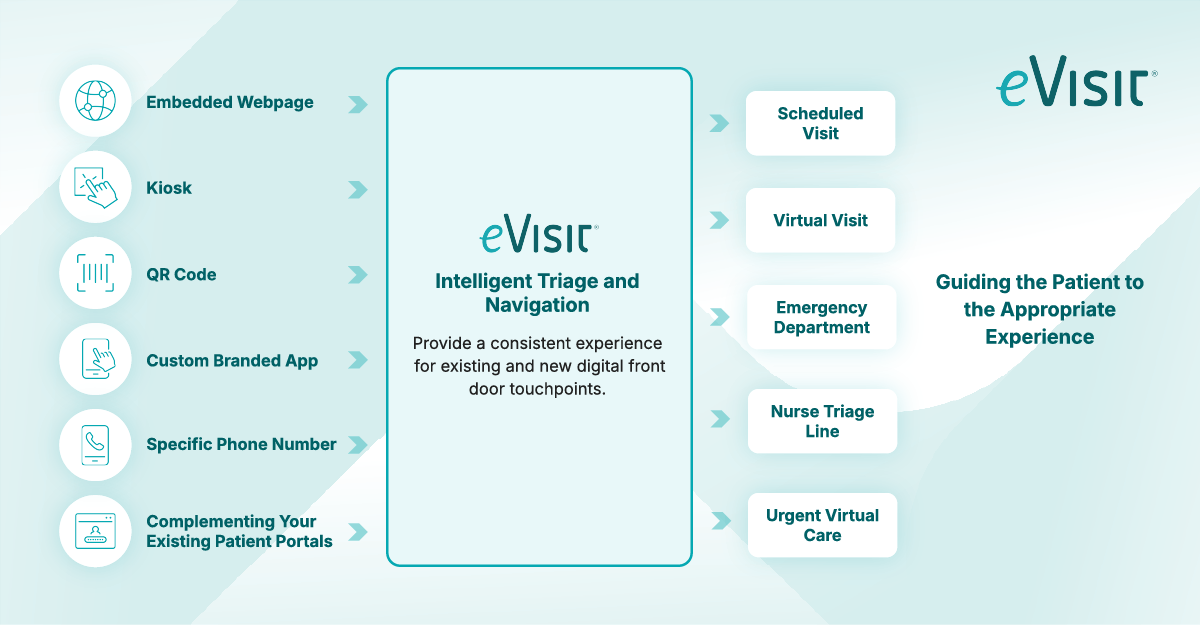
For those inevitable gaps when a patient does miss a scheduled slot, digital tools offer sophisticated ways to “Connect” and recoup that time. eVisit’s Digital Front Door and Digital Command Center capabilities allow for real-time visibility into the patient queue, enabling providers to quickly reassign appointments or move on to the next patient without administrative delay. Furthermore, features like Multiparty Video allow providers to pull in family members, caregivers, or even specialists instantly, increasing the clinical value of the visit and reducing the likelihood of a “dropped” encounter due to incomplete information. And with eVisit Connect, providers can proactively reach out to patients who have dropped off or missed an appointment via phone call then seamlessly convert that interaction into a billable video visit, ensuring no revenue is left on the table.
The Future of a Connected Healthcare Ecosystem
Ultimately, one of the goals of digital health is to create a safety net that catches patients even when they fall out of the standard schedule. Through programs like ED Tele-Triage, a low-acuity patient who misses an office visit but eventually seeks care in an emergency setting can be quickly reassessed without long wait times. In many cases, they can be directed to digital consults with specialists or redirected to available doctors elsewhere in the care network who are free to see them.
By liberating data from fragmented systems and automating the readiness continuum, these digital strategies do more than just combat missed appointments—they improve throughput, reduce unnecessary readmissions, and protect the financial stability of the entire healthcare ecosystem.
RESOURCE CENTER
Related Resources