Expanding Rural Access: How the Hub-and-Spoke Model is Transforming Rural Healthcare
As city centers grow more crowded, rural areas are facing a quiet crisis. The U.S. Government Accountability Office found that more than 100 rural hospitals (about 4%) closed between 2013 and 2020. This forces rural residents to travel 20 miles farther for basic inpatient care and up to 40 miles farther for specialized services like substance use treatment.
This “distance tax” falls hardest on a population that is often older and managing more chronic health conditions than those in urban areas. Compounding the issue, the American Enterprise Institute reports that from 2000 to 2016, the number of primary care physicians in rural areas dropped by 15%—a trend expected to continue. With 60 million Americans living in rural areas, these problems are impacting a large portion of the population.
To solve this crisis, health systems (and states) are moving away from traditional “standalone” hospitals and toward a more resilient strategy: the Hub-and-Spoke Model.
What is the Hub-and-Spoke Model?
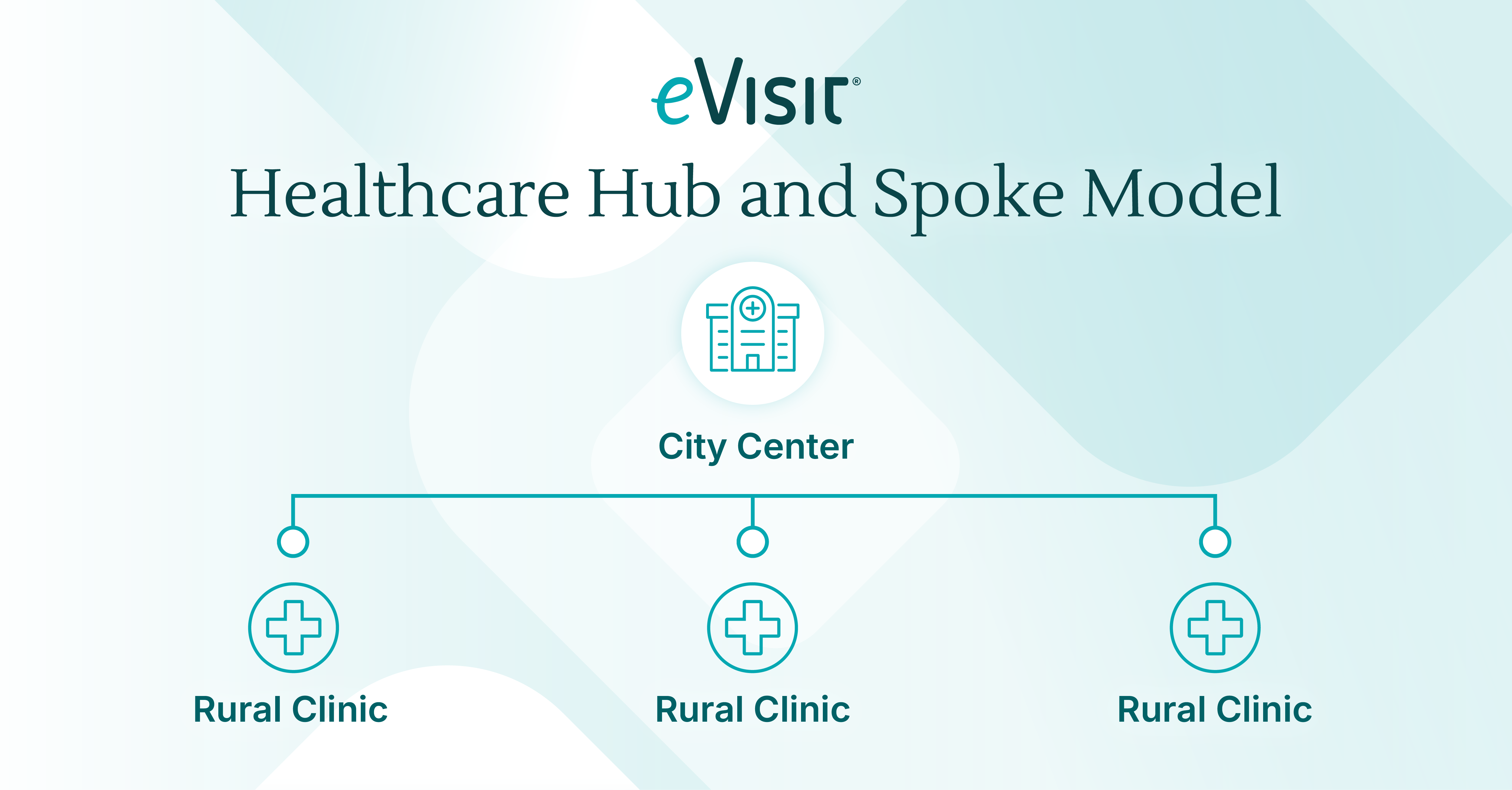
Think of this model as a regional ecosystem rather than a series of isolated outposts. It establishes a central Hub—a major medical center with the heaviest resource investments and most intensive services—and connects it to several Spokes, or satellite campuses, that offer primary and essential care directly in the community (source).
In this model, a patient might visit a local “spoke” clinic for a routine check-up or labs, but if they require specialized surgery, they are seamlessly routed to the “hub.” This approach offers five key advantages:
- Operational Consistency: Unified standards of care across the entire network.
- Cost Efficiency: Maximizing overhead by sharing administrative resources.
- Quality of Care: Concentrating specialized talent where it’s most needed while maintaining local access.
- Market Coverage: Expanding a system’s footprint into underserved “healthcare deserts.”
- Agility: The ability to shift resources quickly as community needs or market demands change.
Hub-and-Spoke 2.0: The Digital Lifeline
The next evolution of this model is being driven by technology. Hub-and-Spoke 2.0 utilizes digital care, remote patient monitoring (RPM), and AI to “beam” specialty care from the hub into the spoke.
Research shows these digital tools allow providers to treat acutely ill patients in their own communities, reducing the need for expensive and exhausting transfers. A prime example is Texas Health Resources, which serves rural counties across the Lone Star State. By integrating eVisit’s Digital Command Center technology, they’ve created a “virtual hub” that ensures rural patients receive expert care in record time.
The New Era: RHTP and State-Led Transformation
The momentum for this model is now being supercharged by federal policy. Under the Rural Health Transformation Program (RHTP), authorized by the One Big Beautiful Bill Act of 2025, the federal government is injecting $50 billion into rural healthcare infrastructure through 2030.
States are using these RHTP funds to turn the hub-and-spoke concept into a statewide reality:
- California: Plans to build regional care collaboratives that link rural hospitals with FQHCs (Federally Qualified Health Centers) using a networked hub approach.
- Alabama: Establishing at least five regional IT and cybersecurity hubs to connect over 40 rural hospitals, aiming to reduce emergency transfers by 15%.
- Arizona & Arkansas: Both states have proposed statewide hub-and-spoke models specifically focused on maternal and primary care to ensure no mother has to drive hours for a prenatal check-up.
Overcoming Roadblocks
Despite the promise, the model isn’t a “set it and forget it” solution. Challenges like “hub congestion,” staff burnout, and the persistent rural broadband gap can stall progress. However, with the RHTP’s focus on technology innovation and workforce development, these barriers are finally being addressed with real capital.
The Future of Rural Healthcare
The data is clear: digital integration can “democratize” specialty care access while keeping rural hospitals financially viable. At eVisit, we are proud to be at the forefront of this shift. Our mission is to rearchitect the very nature of how healthcare is delivered. We help our customers design care pathways that lower the total cost to deliver care, increase access, and enhance both patient and provider experiences – all while strengthening clinical, operational and financial performance. During this important first year of the RHTP, our aim is to help states and health systems adopt the technology needed to make Hub-and-Spoke 2.0 a reality.
We don’t yet know exactly what “Hub-and-Spoke 3.0” will look like, but it will undoubtedly be healthcare that is smarter, faster, and—most importantly—delivered closer to home.
RESOURCE CENTER
Related Resources